
In short. This page is for a central government employee, pensioner or family member living in Vaishali, Indirapuram, Vasundhara or nearby who wants to see a service law advocate in Vaishali about an order, a pension problem or a recovery. It explains what happens when you walk into our office at Cloud9, Vaishali Sector 1, what papers to carry, which tribunal bench will hear you, and roughly how long each stage takes. One meeting is usually enough to know whether you have a case. Call or WhatsApp first so the right file is ready.
Is this your situation?
- You live in Indirapuram, Vaishali, Vasundhara, Kaushambi or Raj Nagar Extension and have an order from your central department that worries you.
- You retired from a Delhi or Ghaziabad office and your pension, gratuity or commutation is short, late or being cut.
- A recovery has started from your salary or pension and nobody has explained the figure.
- You are a widow or a dependent family member and the family pension has stopped, been reduced or never started.
- You have been chargesheeted, transferred or passed over for promotion and want advice before you reply.
- You would rather sit across a table with the papers than explain everything on the phone.
- You are not sure whether your problem is for the tribunal, the High Court or simply a strongly worded letter.
In short
- Fix a time before you come. A quick call or WhatsApp message lets us ask for the one or two papers that decide your matter, so the first meeting is not wasted.
- Carry the order that hurt you, and everything after it. The date on that order and the date you received it matter more than any other fact.
- Your bench depends on where you work, not where you sleep. Many Indirapuram residents posted in Delhi file at the Principal Bench; those posted in Ghaziabad usually go to Prayagraj.
- Pensioners get an extra option. After retirement, the place you live also counts, so the choice of bench needs a few minutes of thought.
- Do not send another reminder letter before the meeting. Repeated letters do not stop the one-year limit, and a careless one can make your position worse.
Who comes to the Vaishali office, and with what
Trans-Hindon Ghaziabad has one of the densest populations of central government staff and pensioners anywhere in the National Capital Region. Many of them worked in ministries at North Block or Nirman Bhawan, in railway offices at Baroda House or in the postal circles, then bought flats in Indirapuram or Vasundhara when they left government quarters. Others still commute every day on the Blue Line. So most people who walk into our Vaishali office are not looking for a lawyer in the abstract. They have a specific letter in a plastic folder and one question: can this be undone?
The problems repeat. A retired section officer finds his pension fixed on the wrong pay level after an MACP was withdrawn. A postal assistant in a Ghaziabad sub-office is told Rs 1.8 lakh will be recovered over twelve months. A Kendriya Vidyalaya teacher living in Vaishali Sector 4 is transferred to a station in the North East two years before retirement. A widow in Vasundhara gets a letter from the bank saying her family pension was paid at the wrong rate. A young candidate from Raj Nagar Extension is rejected at document verification for an OBC certificate in the state format.
Each of these needs a different first move. Some need a reply within days, some need a records request, and a few need nothing more than a correctly addressed letter. The first meeting is meant to sort out which one you are.
Choosing a service law advocate in Vaishali: what to ask before you engage anyone
Anybody can put a board outside an office. Service law is narrow enough that you should ask a few direct questions before you hand over your papers, whoever you consult. How often does the advocate file in the Central Administrative Tribunal? Who will actually draft your application? If your case has to go to the Allahabad Bench at Prayagraj, who will appear there on routine dates, and how will you hear what happened?
Ask also how the fee is structured. A sensible arrangement splits the work into stages (advice, representation, tribunal case, any writ) and puts the terms in writing before work starts. If a lawyer quotes a single figure for everything up to the Supreme Court, or promises a result, treat that as a warning sign. The Bar Council's rules do not allow advocates to promise outcomes, and no honest service lawyer can predict what a bench will do with your file.
A Ghaziabad service lawyer should also be willing to tell you when not to file. Some cases are simply out of time. Others are better solved by a letter to the pension sanctioning authority. If the person across the table never says no, ask yourself why.
If you have a matter that is mostly about Delhi offices and you live in the west of the city, our guide on meeting a service law advocate in Dwarka covers the other office.
Which tribunal bench hears a case from Indirapuram or Vaishali
The bench is chosen under Rule 6 of the CAT (Procedure) Rules, 1987, and the rule looks at your desk, not your flat. While you are in service, two places count: the town of your present posting on the day of filing, and any town where some part of the dispute took place. A flat in Indirapuram, on its own, gives Delhi no claim. If your office is in Delhi, the Principal Bench at Copernicus Marg hears you. If your office is in Ghaziabad district, it is normally the Allahabad Bench at Prayagraj.
Retirement adds one more door. Rule 6(2) allows a person who has left service to file where he or she ordinarily resides. For a pensioner in Vasundhara that points to Prayagraj, but the bench where the dispute arose usually stays open as well. So a pensioner whose last office and pension sanctioning authority were in Delhi can usually still use the Principal Bench.
There is a live controversy behind this. For years, many western Uttar Pradesh cases were moved to Delhi using the Chairman's transfer power under Section 25, and the Allahabad High Court questioned that practice in 2025. We have not seen a final ruling. Until there is one, we file in Delhi only where there is a real Delhi link and we say so plainly in the application. Our page on service cases of central employees in Ghaziabad sets out the four common situations, and the pages on the Principal Bench in New Delhi and the Allahabad Bench at Prayagraj explain how each works.
How long each stage takes, and what it costs in general terms
| Stage | Usual time | Money involved (no lawyer fee figures) |
|---|---|---|
| First meeting at Vaishali | One sitting; most people leave within an hour | Our fee terms are explained at this meeting and written down if you go ahead |
| Getting missing papers by RTI or a written request | 30 days for a reply from the information officer; add about two months if a first appeal is needed | Rs 10 RTI fee per application, plus copying charges |
| Representation and the department's six months | Up to six months under Section 20, shorter if the department rejects it earlier | Registered post and photocopies |
| Drafting and filing the Original Application | Two to five weeks once all papers are in hand | A small tribunal fee (Rs 50 under Rule 7 of the CAT Procedure Rules; confirm the current amount with the registry), plus typing, paper books and notary |
| First listing and notice to the department | A few weeks after filing at most benches, though it varies | Minor service and process costs |
| Department's reply and your rejoinder | Rule 12 gives a month for the reply, but three to nine months is common because extensions are granted | Extra sets and any additional affidavit |
| Arguments and final order | Sometimes under a year in a simple pension or recovery case; two years or more where facts are disputed | Depends on hearings and stages; agreed in writing before the case begins |
| Getting the order carried out | The order usually gives the department two to four months | A contempt or execution petition only if the department sits on it |
From your first phone call to a filed case
This is the usual order of work for a client from Vaishali or Indirapuram. Not every matter needs every step.
Call or message with the basics
Tell us your department, your post (or last post if retired) and the date on the order. We will tell you which papers to bring and give you a time. If the order has a short deadline, such as a 15-day show cause notice, say so at once.
Bring the papers to Vaishali
We read the order, your earlier letters and the rule the department relies on. The first question is always limitation: how many days of the one year under Section 21 are already gone. The second is forum: CAT, High Court or another body.
Fill the gaps in the record
Most files have holes, usually a missing service book page, a pay fixation statement nobody gave you or the note on which a decision was taken. We draft the RTI request or the written demand for those papers. Our guide on organising your service case folder shows how to sort what you already have.
Send a representation where one is required
Before the tribunal will hear you, Section 20 normally wants the department to have had its chance, through a statutory appeal or a representation to whoever can actually decide. We write that letter so that it can later be annexed to a tribunal application without embarrassment, with the rule, the figures and the relief stated clearly.
Decide whether to file, and where
If the department rejects you or the six months pass, we decide with you whether a tribunal case is worth it. You get a plain view of the strong and weak points. The bench is fixed at this stage, using Rule 6.
Draft, sign and file
The application, its index, list of dates and annexures are prepared. You read the draft and sign the verification. Filing is done online through the CAT e-filing portal or physically, depending on the bench and the papers.
After filing, you get a short update after each listing, even if the only thing that happened was an adjournment.
What to carry to the first meeting
If you are still in service
- The order itself, plus the cover, postmark or email that shows its arrival date
- Any show cause notice, chargesheet or memo that came before it, and your reply
- Your appointment letter and the last promotion or MACP order
- Last three pay slips and any pay fixation statement
- Copies of every representation you sent, with the receipt or acknowledgement
If you are a pensioner
- Your Pension Payment Order and any revised PPO
- Bank passbook pages showing the pension credits for the period in dispute
- The letter or bank message announcing a recovery or a cut
- Your last pay certificate and retirement order
- Any reply you have had from the Pay and Accounts Office, CPAO or the pension cell
If you are a family member
- Death certificate of the employee or pensioner
- The PPO showing your name as family pensioner, or the family details form submitted in service
- Proof of relationship and, for a daughter or dependent parent, proof of income and status
- Any letter refusing or reducing the family pension
Pension problems we see most often from Indirapuram and Vasundhara
The single largest group of pensioners who visit us are people whose pension was correct for years and then changed. A clerk in the accounts office finds an old mistake, the pension is refixed downward and a recovery letter arrives for the excess paid over five or ten years. Rule 66 of the CCS (Pension) Rules, 2021 allows an authorised pension to be reduced only for a clerical error, and the Supreme Court's 2015 judgment in Rafiq Masih bars recovery from retirees in most such situations. Many of these letters can be challenged, and the bench can be asked to stop the recovery while the case is heard. Our page on recovery from pension after retirement covers that ground.
The second group is the June 30 and December 31 retiree who was denied the notional increment, and the pensioner whose MACP or promotion was not counted in the last pay. The third is family pension: a widow paid at the normal rate when the enhanced rate was due, or a divorced daughter refused because the divorce papers were filed after the parent died.
If you are looking for a pension lawyer in Ghaziabad, the first thing to know is that time works differently for pensions. A wrong pension is wrong again every month, so the claim is usually not lost to delay. What you can lose is arrears. Courts have often limited arrears to about three years before filing, though two Supreme Court judgments of 2026 refused to apply that limit to family pension and disability pension. Waiting is still expensive. Our broader page on central government pension disputes explains each claim.
Serving employees: the matters that will not wait
For someone still in service the clock is usually shorter and the stakes are different. Think of a KV teacher whose relieving order is dated next Monday, a clerk whose pay slip already shows a recovery line, an officer still suspended four months on with no review order, or someone holding a chargesheet that gives fifteen days for a written defence. None of them can wait for a convenient appointment next fortnight. Tell us on the phone if your matter is one of these.
Not every urgent matter needs the tribunal. A transfer of a person caring for a disabled dependent can sometimes be held back by a well-supported representation citing the DoPT caregiver instructions. A recovery can sometimes be paused by asking the drawing officer, in writing, to wait for a decision on your objection. We try those routes first where they have a real chance.
Where the tribunal is needed, an interim order under Section 24 can hold the position. That needs a strong first look at the papers, a reason why a later money award would not put things right, and an application filed before the damage is done. Relieving orders that have already been carried out are harder to stay.
Two practical tips from Advocate B.K. Singh
- Write the date of receipt on every order the day it arrives. Advocate B.K. Singh asks every client in the first meeting when the order reached them, and most people do not know. A pencil note on the top corner, or a photo of the envelope, settles the limitation question later and can save a delay application.
- Never sign a fresh option, undertaking or no-objection while a dispute is open. Offices in Ghaziabad and Delhi routinely send a pensioner or employee a form to sign along with a recovery or refixation letter. Some of these forms are undertakings that the department later relies on to justify recovery. Bring the form unsigned to the meeting; signing it can wait a day.
A made-up example: a family pension recovery in Indirapuram
Here's a made-up example. Kusum, 69, lives in Ahinsa Khand, Indirapuram. Her husband retired as an Inspector of Posts from a Delhi postal division and died at the age of 64. The bank kept crediting the higher, enhanced family pension for seven years. Then it wrote that she had been entitled to the higher amount only until the date her husband would have reached 67, so Rs 5.1 lakh of excess would be recovered at Rs 15,000 a month.
At the first meeting, we checked three things. Was the rate actually wrong under the family pension rule? It probably was. Did Kusum cause the excess in any way? She did not; she never filled a form that misstated anything. And did she sign an undertaking at any point? She had signed one bank form, and its wording was general, not a promise to refund this kind of excess.
A representation went to the pension sanctioning authority in Delhi citing Rule 66, Rafiq Masih and the government's own instructions applying that judgment. When nothing came in eight weeks and the deductions continued, an application was filed at the Principal Bench, since the dispute arose from a Delhi office, with a prayer to stop recovery in the meantime. In this made-up case the bench asked the department to stop deductions until the next date and file its reply. The future rate was corrected; the question of the past excess was left for the final hearing.
The useful part of this example is not the result, which can go either way in a real case. It is the order of work: rule first, then fault, then undertaking, then forum.
If you cannot come to Vaishali yourself
Many of our pensioner clients are in their seventies or older, and some cannot climb into an auto, let alone a metro. A son, daughter or neighbour can bring the papers for the first meeting, and we can speak to you on a video call while they are in the office. The decisions, and the signature on any application, still need to be yours.
Signing can be arranged without a trip. Drafts can be read to you over the phone, and the verification and vakalatnama can be signed at home and brought back. Where the bench insists on an affidavit, a notary visit can be organised locally.
If you have moved to another city altogether, perhaps to live with a child in Pune or Bengaluru, your case can still be handled from here. Our guide on online briefing for a service matter from another state describes how that works in practice.
People in Ghaziabad whose case does not belong in CAT
Not every government-looking job is under the Central Administrative Tribunal. An airman posted at Hindon, for instance, takes a grievance to the Armed Forces Tribunal. A CISF head constable, a manager at a nationalised bank branch in Raj Nagar or an engineer with a central PSU has no tribunal at all and must file a writ in the High Court. Someone on the rolls of the Uttar Pradesh government, the Ghaziabad Nagar Nigam or the development authority is a state employee, whose route lies through the UP State Public Services Tribunal at Lucknow or the High Court, depending on the matter.
Civilians working in defence establishments, on the other hand, are under CAT. So are employees of the Delhi government, which surprises some families living on the UP side of the border. Our page on writs for CAPF, PSU and bank employees covers those who must go to the High Court.
Any central employee lawyer UP clients consult should spend the first five minutes of the meeting on this question, and we do. Filing in the wrong forum costs months, and the limitation period does not pause while you find the right one. The district-level picture, including which offices around Hindon and Sahibabad fall where, is on our page for central employees in Ghaziabad.
When you do not need a lawyer yet
Some matters are stuck rather than disputed. A pension file sitting in the Bhavishya portal with a pending status, a CGHS card not issued, a commutation that has been sanctioned but not paid: these often move with a complaint on CPGRAMS, a call to the pension cell, or a short letter to your old head of office copied to the accounts office. We will tell you so if that is your situation.
There are also cases where the law is against you and money spent on a tribunal case is money lost. A claim for a promotion given to a colleague fifteen years ago, with seniority lists settled and dozens of people affected, is rarely worth pursuing. So is a challenge to a transfer that follows the policy and causes no special hardship. Saying this at the start is part of the advice.
Mistakes that cost Ghaziabad clients time
- Writing the fourth reminder instead of filing. Since S.S. Rathore v. State of M.P. (1989), it has been settled that a pile of reminders buys no extra time; the year runs from the first rejection or the end of the six months.
- Assuming Delhi because Delhi is closer. A case filed at the wrong bench may be returned, and the weeks lost cannot be recovered.
- Throwing away envelopes. The postmark is often the only proof of when an order reached you.
- Going to the department in person and arguing. Oral discussions leave no record, and an angry exchange can become a misconduct allegation for a serving employee.
- Accepting a revised PPO without checking it. Compare it line by line with the old one; a dropped increment often shows up only here.
Fees, staffing and how your file is handled
You will not find fee figures on this site. What a matter costs turns on how far it goes, which bench hears it and how thick the file is, so we talk about it face to face at the first meeting and then write it down, one stage at a time, before any work starts. Nobody should be surprised by a bill for the tribunal stage when they agreed only to a representation. Our page on how we work and charge explains the structure.
Advocate B.K. Singh reads the papers and settles the advice and drafting in each matter. Advocate Sadhna Singh helps clients put their records in order and follows up on RTI replies and departmental letters. For matters at the Allahabad Bench, associate counsel at Prayagraj attend routine listings, and you hear from us after each one.
What to do this week
Find the order, note the date it reached you, and gather whatever came before and after it. Do not sign anything new that the office sends you until someone has read it. If a deadline falls within the next fifteen days, call rather than message.
Our office is at Cloud9, Tower S3, Vaishali Sector 1, close to the Vaishali metro station at the end of the Blue Line branch. The number for calls and WhatsApp is +91 96259 61599. If you would like to know what will be asked of you, read our note on what a service lawyer asks on the first call.
To have your papers read or to get updates on changes in service and pension rules, contact Advocate B.K. Singh.
Frequently asked questions
Is there a service lawyer in Indirapuram or do I have to go to Delhi?
Our office is in Vaishali Sector 1, a short drive from most parts of Indirapuram, so you do not need to go to Delhi for the meeting. Whether the case itself is heard in Delhi or Prayagraj depends on your posting or, for pensioners, on residence and where the dispute arose.
I live in Vaishali but work in a Delhi ministry. Which bench hears me?
Usually the Principal Bench at Copernicus Marg, because you are posted in Delhi. Your home address in Ghaziabad does not change that for a serving employee.
My father is 82 and cannot travel. Can I come instead?
Yes. You can bring his papers and we can speak to him by phone or video during the meeting. He will still need to sign the vakalatnama and the verification himself, which can be done at home.
How much does a CAT case cost?
The tribunal charges only a token amount at filing, Rs 50 as the procedure rules stand, but ask the registry whether that has changed. Professional charges vary with the stage and bench, and we settle them on paper when we first meet.
Can you stop a recovery from my pension quickly?
Often an interim order can be sought when the application is filed, if the recovery appears to be barred under Rafiq Masih or Rule 66. Whether the bench grants it depends on the papers, so no one can promise it.
Do you handle cases at the Allahabad Bench in Prayagraj?
Yes. Drafting and strategy are done from Vaishali, and associate counsel at Prayagraj attend routine dates. Many hearings there can be joined by video.
I work for a bank in Ghaziabad. Can I file in CAT?
No. Bank and public sector employees are not under the tribunal. Your remedy is usually a writ petition in the High Court, or an industrial dispute where you are a workman.
Should I send another reminder to my department before meeting you?
Better not. Reminders do not extend the one-year limit, and a hastily written one may concede a point you should not. Bring your earlier letters to the meeting instead.
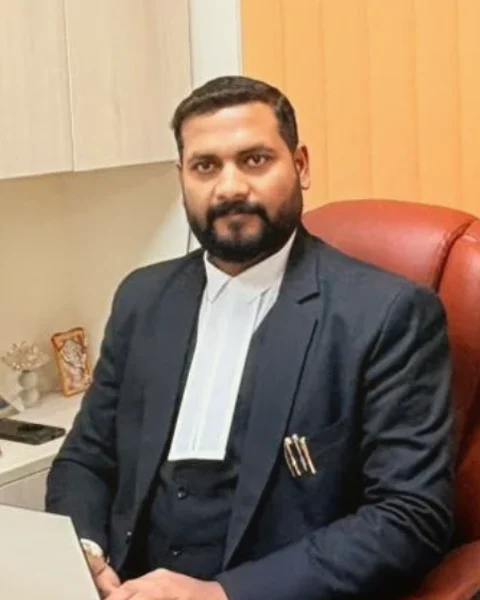
Advocate B.K. Singh
Founder of B.K. Singh & Associates. MCA, LL.B., LL.M. More than twenty years in practice before the Supreme Court, the Delhi High Court and other High Courts, the Central Administrative Tribunal and other tribunals. This guide was written and reviewed by his team.
This guide explains the law in general terms and is not legal advice. For advice on your own papers, contact the team.
Related guides
Choosing a LawyerWhat a Service Lawyer Will Ask You on the First Call
The questions a service lawyer asks on the first call, why each one matters, and what to keep in front of you so a short consultation gives real...
Choosing a LawyerOrganising Your Service Case Folder Before Meeting a Lawyer
How to arrange a service case documents folder before you meet a lawyer: order copies first, a one-page chronology, numbered pages and clean scans.
Choosing a LawyerGetting Help in a Departmental Inquiry When a Lawyer Cannot Appear
When can you get permission for a lawyer in a departmental inquiry, how to ask, and how an advocate can prepare your defence behind the scenes if...
Getting StartedService Law Words Every Central Government Employee Should Know: OA, MA, DPC, APAR and More
Plain meanings of the service law terms central employees meet: OA and MA in CAT, APAR full form, DPC, respondent, sealed cover, MACP and pension...
Getting StartedGot an Adverse Order From Your Department? What to Do in the First 7 Days
Adverse order from your department? A day-by-day plan for the first week: time limits for appeal or representation, service record copy, reply and...
Getting StartedIs My Problem a Service Matter or Something Else? 12 Examples
Pay, pension, recruitment, quarters, harassment, contract work: 12 made-up cases showing which problems are service matters and which forum hears...